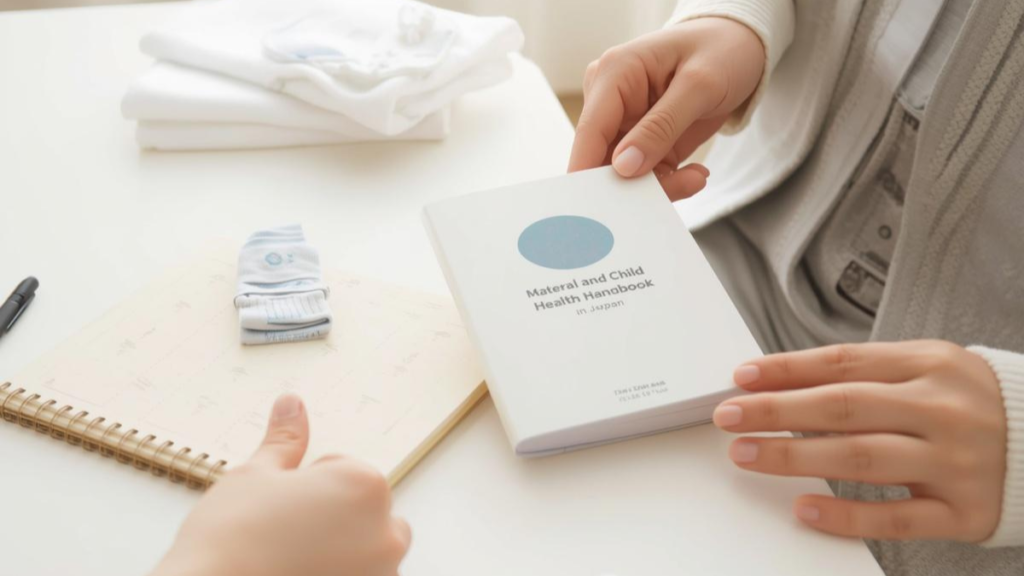
If you are pregnant in Japan, one of the first administrative steps you need to take is getting a Maternal and Child Health Handbook (母子健康手帳 / Boshi Techo).
This handbook is not just a notebook. It is an official record used across medical care, public health services, and childcare systems in Japan.
This guide explains where to get it, what it includes, and how to use it properly.
1. What Is the Maternal and Child Health Handbook?
The Maternal and Child Health Handbook is a government-issued record that tracks both the mother’s health during pregnancy and the child’s development after birth.
It is used to:
- record prenatal checkups and test results
- document the birth and newborn condition
- track vaccinations and growth milestones
- share medical information across clinics and hospitals
In Japan, this handbook is considered an essential part of maternity care. Even if your pregnancy is going smoothly, it is important to bring it to every appointment.
To understand how it is used during checkups:
👉 Read: Prenatal Checkups in Japan: What to Expect at Each Visit
2. Where and When to Get It

You can get your handbook at your local city hall. As soon as your pregnancy is confirmed, you should register your pregnancy and receive the handbook.
Step-by-step process
- Confirm your pregnancy at a clinic or hospital
- Visit your local city hall to submit a pregnancy notification form (妊娠届)
- Receive your Maternal and Child Health Handbook
Important notes for foreign residents
- You do not need Japanese citizenship
- You usually need a registered address in Japan
- Some cities provide multilingual versions
If you are still choosing a clinic or hospital:
👉 Read: Tips for Choosing the Hospital to Deliver Your Baby
3. What’s Inside & What You Receive
The handbook includes records covering pregnancy, birth, and early childhood.
| Main Sections | Stage | What It Includes |
|---|---|---|
| Pregnancy | During pregnancy | Checkup records, test results |
| Birth | At delivery | Delivery details, newborn condition |
| After birth | Postpartum & early childhood | Vaccinations, growth and development |
What you receive together with it
- prenatal checkup subsidy coupons
- information about local parenting services
- guidance on classes and support programs
Learn how these coupons are used:
👉 Read: Prenatal Checkups in Japan: What to Expect at Each Visit
4. How and When to Use It

You should bring the handbook to all major medical and childcare-related appointments.
When you must bring it
- Prenatal checkups
- Delivery (hospital admission)
- Infant health checkups
- Vaccinations
- Some childcare or daycare procedures
How to use it
- Keep all records updated
- Bring it to every clinic visit
- Use it to track your child’s health history
In emergencies or unexpected situations, having this handbook helps medical staff quickly understand your child’s condition.
For example, when your child has a fever:
👉 Read: 3 Things to Prepare When Your Child Has a Fever in Japan
5. Tips & Next Step

Common mistakes
- Forgetting to bring it to appointments
- Not updating records
- Not checking procedures after moving to a new city
Tips for foreign parents
- Ask if your city offers a multilingual version
- Use translation apps if needed
- Keep it in a fixed place so you don’t forget it
Useful Links (Official & Trusted)
- Hospitals with Foreign Language Speaking Doctors (Kyoto City)
- Maternal & Child Health Interpreter Consultation (SHARE)
Multilingual support for communicating at clinics and hospitals. - AMDA Medical Information Center
Helps you find clinics and hospitals with foreign-language support