Japan offers one of the world’s safest maternity care systems. From confirming your pregnancy to registering, there are several required steps.
This article explains the first things you should do, what documents you need, and how to access support as a multicultural family living in Japan.
1. Confirming Pregnancy
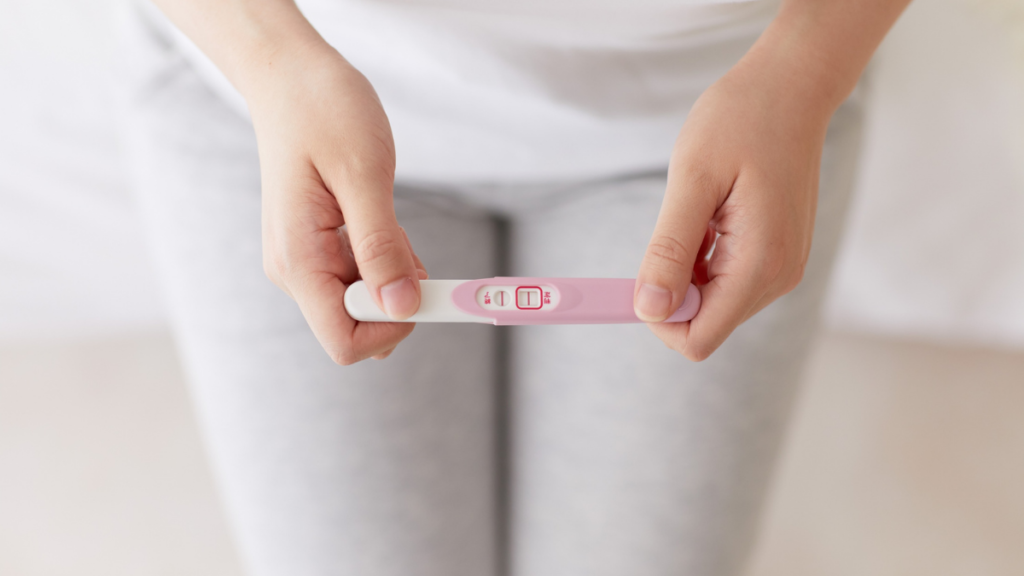
Home pregnancy tests are widely available at pharmacies and drugstores in Japan. If the test is positive or if you strongly suspect pregnancy, the next step is to visit an obstetrics and gynecology clinic (sanfujinka).
At the clinic, the doctor will usually:
- perform a urine test and/or ultrasound
- confirm whether you are pregnant
- estimate your due date
- check that the pregnancy is in the uterus (not ectopic)
- later, issue a pregnancy certificate
The pregnancy certificate is usually issued after the baby’s heartbeat is confirmed, often around 6-9 weeks of pregnancy. You will need this certificate to register your pregnancy at city hall.
2. Registering Pregnancy at City Hall
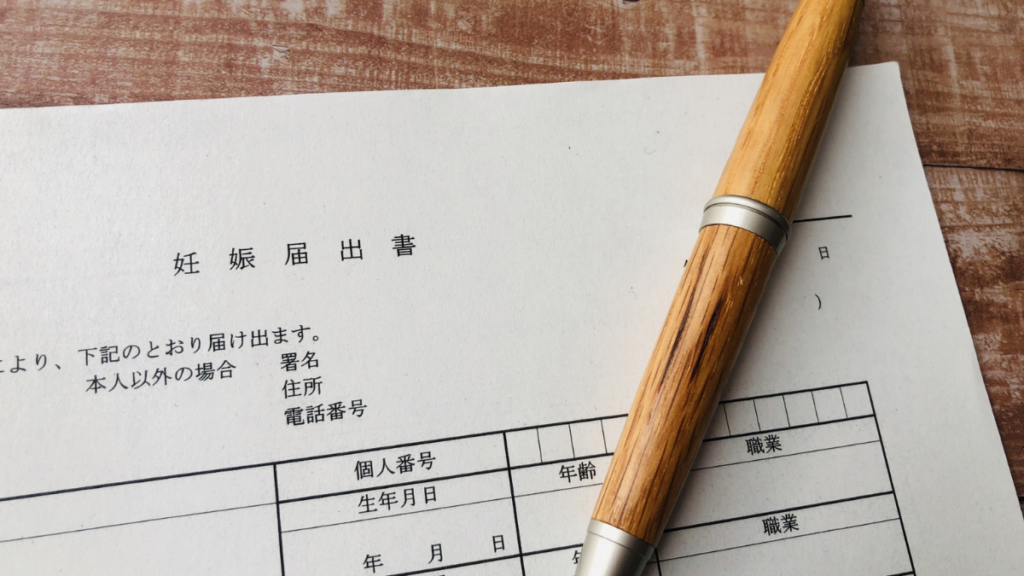
Once your pregnancy is medically confirmed and you have the certificate, the next step is to register it at your city hall. Go to the counter for Maternal and Child Health.
What to bring
- Pregnancy certificate
- Residence card
- My Number card
- Basic personal information (address, phone number, due date)
What happens at the counter
- You fill in a short registration form.
- You submit the pregnancy certificate.
- Staff confirm your contact details and due date.
- You receive several important items and explanations.
What you receive
- Maternal and Child Health Handbook (boshi techo)
- Coupon booklet for prenatal and postnatal checkups
- Vaccination pre-check forms for after the baby is born
- A postcard or form to notify the baby’s birth
- Information about home visits, parenting classes, and local support services
Many city halls provide English leaflets or interpreter support. Do not hesitate to ask.
3. Maternal and Child Health Handbook
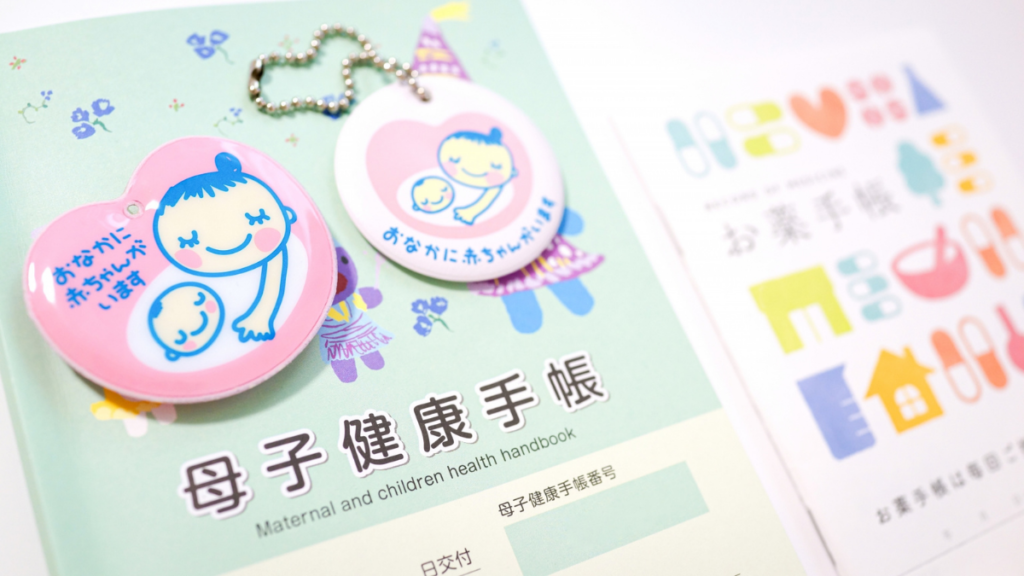
The Maternal and Child Health Handbook (boshi techo) is one of the most important documents for pregnancy and early childhood in Japan.
It records:
- pregnancy checkups
- test results and ultrasound notes
- labor and delivery information
- your child’s growth from birth to around age 6
- vaccinations and regular health checkups
You should bring it when you go to a pregnancy checkup, take your baby to health checkups or vaccinations.
4. Free Coupons for Prenatal Checkups
In Japan, normal pregnancy and delivery are not covered by national health insurance. To reduce the cost, each municipality provides coupon tickets for prenatal checkups.
These coupons usually cover around 14 checkups from early pregnancy until birth.
Coupons typically help pay for:
- doctor’s consultation
- urine and blood tests
- ultrasound scans
- infection screening
Part of the fee is covered by the coupon, and you pay the remainder yourself.
5. A Postcard to Notify the Baby’s Birth
When you receive your Maternal and Child Health Handbook, you will also receive a birth notification postcard addressed to your local health center.
After your baby is born, fill in the required information and mail it to the health center. A public health nurse will review it and contact you to arrange a home visit for newborn support.
6. Home Visits for Expectant Mothers
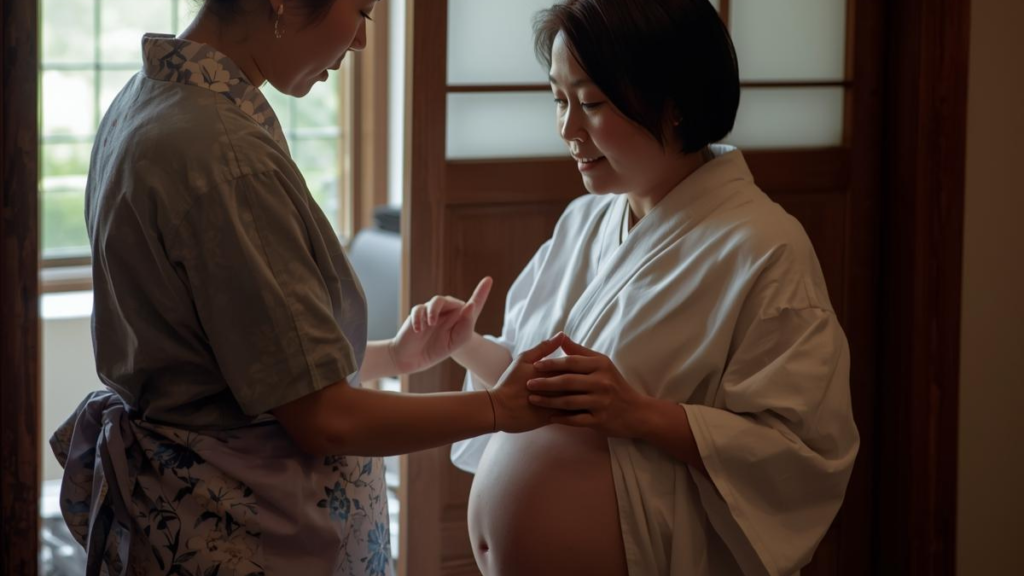
A public health nurse or midwife visits your home to provide advice on pregnancy and check your physical and emotional condition.
Also, some cities provide interpreter dispatch or multilingual support for maternity care and home visits.
To check what is available in your area, contact:
- your city hall’s Maternal & Child Health Division
- your local international association
- your multicultural support center
7. Useful Links & Next Step
If you want to feel more prepared for future fevers, download our full Guide from below!
Useful Links (Official & Trusted)
- Mother’s Tree Japan Official LINE
Multilingual support via official LINE account. Families can consult pediatricians and midwives directly in 13 languages. - Maternal & Child Health Interpreter Consultation (SHARE)
Multilingual support for communicating at clinics and hospitals. - AMDA Medical Information Center
Helps you find clinics and hospitals with foreign-language support