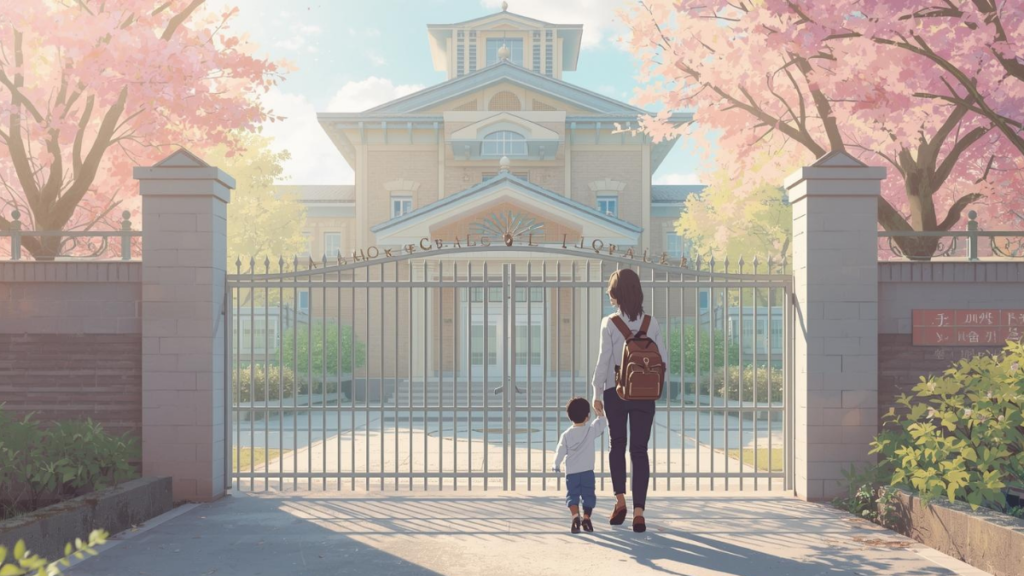
Japan’s education system is often confusing for families who did not grow up here.
This article explains Japan’s education system in a clear way – including school structure, ages and grades, and what parents need to know before enrolling a child. It is designed for foreign and multicultural families who want to understand the basics before making school choices in Japan.
1. Overview of Japan’s Education System
Japan’s education system follows a nationwide structure. While school stages and grade levels are largely consistent across Japan, details such as school size and local support services may vary by municipality.
In general, children move through:
- Preschool / Early Childhood Education
- Elementary School
- Junior High School
- High School
- Higher Education (university, junior college, vocational schools)
2. School Ages and Grade Levels in Japan
Japan’s school year runs from April to March, and children start elementary school if they turn 6 by April 1 (this April cutoff decides their school entry year and grade).
Age and Grade Table
| School Level | Age Range | Grades | Compulsory |
|---|---|---|---|
| Preschool | 0–5 | – | No |
| Elementary School | 6–12 | Grades 1–6 | Yes |
| Junior High School | 12–15 | Grades 7–9 | Yes |
| High School | 15–18 | Grades 10–12 | No |
| Higher Education | 18+ | – | No |
Compulsory education in Japan lasts 9 years, from elementary school through junior high school.
3. School Stages Explained
Preschool and Early Childhood Education (0-5)
Preschool education in Japan includes several types of facilities, such as: Hoikuen (Daycare), Yochien (Kindergarten), and Kodomoen (Certified Center).
👉 Read: What’s the Difference Between Temporary Daycare and Normal Daycare
Preschool is not compulsory, but many children attend from age 3. Programs focus on social development, daily routines, and play-based learning rather than academics.
Elementary School (Grades 1-6)
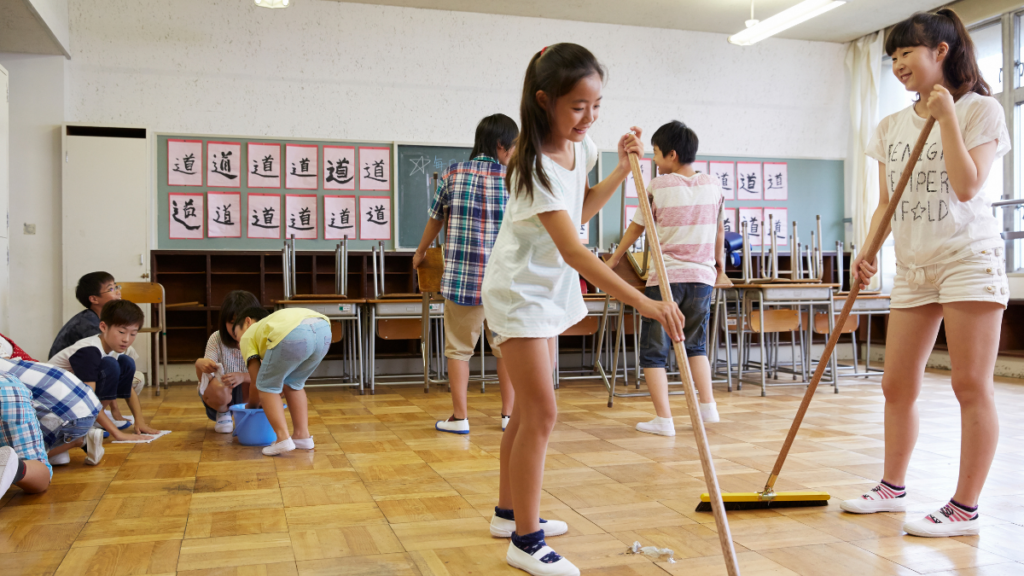
Elementary school is the first stage of compulsory education and a major milestone for families. Children learn:
- Japanese language
- Mathematics
- Science and social studies
- Music, art, and physical education
- Moral education and daily life skills
For many foreign families, elementary school is the first major point of contact with Japan’s education system. Understanding daily routines and expectations early helps children adjust smoothly.
Junior High School (Grades 7-9)

Junior high school completes compulsory education in Japan. Key characteristics:
- More structured academic curriculum
- Subject-specific teachers
- Increased homework and exams
Academic pressure increases during junior high school, as grades and attendance begin to affect high school options.
High School (Grades 10-12)
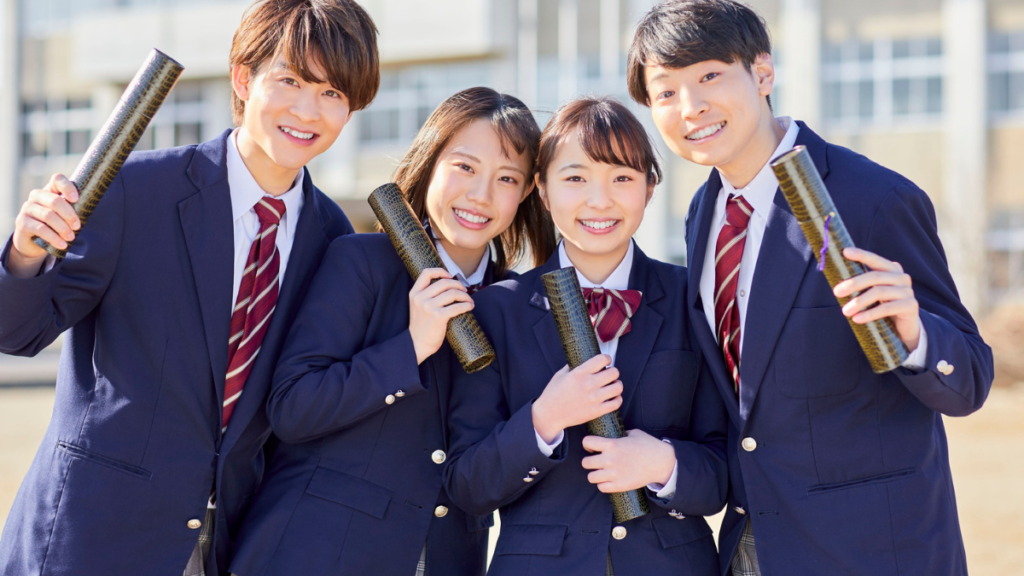
High school is not compulsory, but over 98% of students continue. Students apply and take entrance exams for:
- Public high schools
- Private high schools
- Specialized or vocational tracks
High school choice plays an important role in future academic or career paths, even though attendance is not legally required.
4. Daily School Life and Academic Culture

Parents often want to know not only what children learn, but also how a typical school day and school year are structured in Japan.
Typical School Day
- Arrival between 8:00-8:30
- Morning classes
- Lunch
- Afternoon classes or activities
- Cleaning time (students clean classrooms)
- Club activities (especially in junior high and high school)
- Specialized or vocational tracks
School Culture Highlights
- Strong emphasis on group harmony
- Students participate in cleaning and daily routines
- Communication notebooks between school and home are common
- Parent involvement is expected, especially in elementary school
5. Key Differences from Other Countries
- School year starts in April
- Strong focus on group activities
- Entrance exams play a major role
- Schools expect active parent participation
Once you understand when children enter school, which stages are compulsory, and how grades and ages work, the overall system becomes much easier to navigate.
You are better prepared to decide:
- which school type fits your child
- whether public or private options make sense
- when to seek language or learning support
Next Step
This article explained how Japan’s education system is structured. The next step is understanding how to choose a school.
👉 Read: Choosing Schools in Japan: Public, Private, and Options for Foreign Families