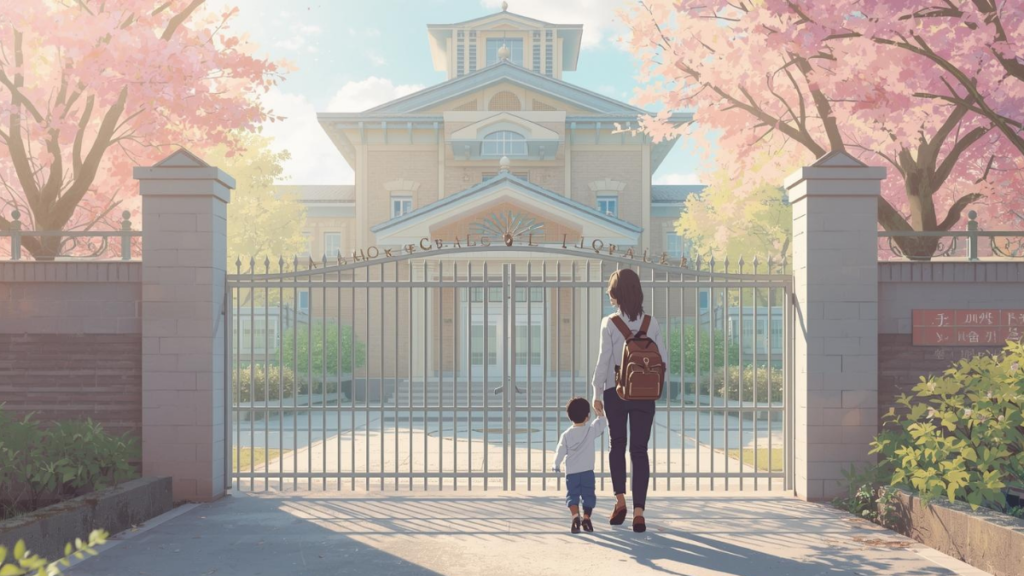
Japan offers multiple schooling options and each differs in language, curriculum, cost, and long-term impact on your child’s education.
This article explains what school options are available, how public and private schools work and how to choose a school that fits your family’s situation.
It is designed to help parents make informed decisions, especially when navigating the system for the first time.
- What School Options Are Available in Japan?
- Public Schools
- Private and International Schools
- Language Support as a Second Language
- How to Choose the Right School for Your Child
- Useful Links & Next Step
1. What School Options Are Available in Japan?
In Japan, families generally choose from several types of schools. The main differences lie in who operates the school, language of instruction, cost, and admission requirements.
Main School Options in Japan
| School Type | Japanese Name | Ages / Grades | Operated by | Entrance Exam |
|---|---|---|---|---|
| Public Elementary School | 公立小学校 | Ages 6–12 (Grades 1–6) | City / Ward | No |
| Public Junior High School | 公立中学校 | Ages 12–15 (Grades 7–9)* | City / Ward | No |
| Public High School | 公立高校 | Ages 15–18 | Prefecture / City | Yes |
| Private School (Elementary to High School) | 私立小・中・高 | Ages 6–18 | Private organization | Yes |
| International School | インターナショナルスクール | Varies | Private organization | Yes |
| Public University | 国公立大学 | 18+ | National / Prefecture / City | Yes |
| Private University | 私立大学 | 18+ | Private organization | Yes |
*Grades 7–9 correspond to junior high school in Japan.
Usually, students are called “1st year,” “2nd year,” and “3rd year” of junior high school. However, in integrated elementary to junior high schools, grades may be labeled as Grade 7, Grade 8, and Grade 9 following the six years of elementary school.
2. Public Schools
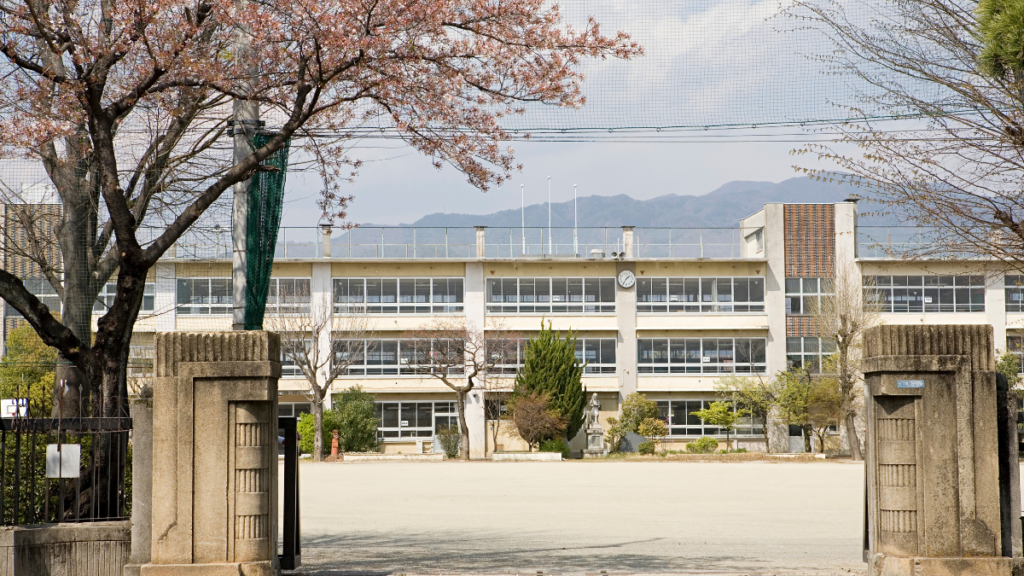
Public schools are the most common choice for families living in Japan, including foreign residents.
They follow a national curriculum set by MEXT (Ministry of Education, Culture, Sports, Science and Technology) and are closely tied to the local community.
Elementary & Junior High Schools
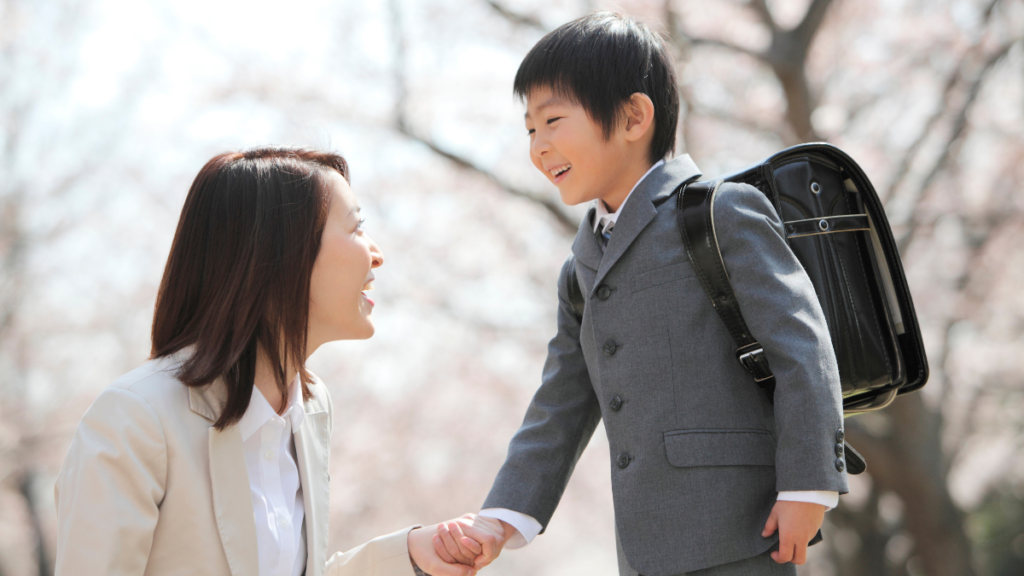
Key points:
- For children aged 6 to 15, education is compulsory
- Schools are assigned based on your registered address
- Parents usually cannot choose freely
- Tuition is free, and textbooks are provided
- Parents are expected to participate in school events and PTA activities

Typical process:
- Register your address at city hall
- Receive a school assignment notice
- Enroll at the designated local school
High Schools
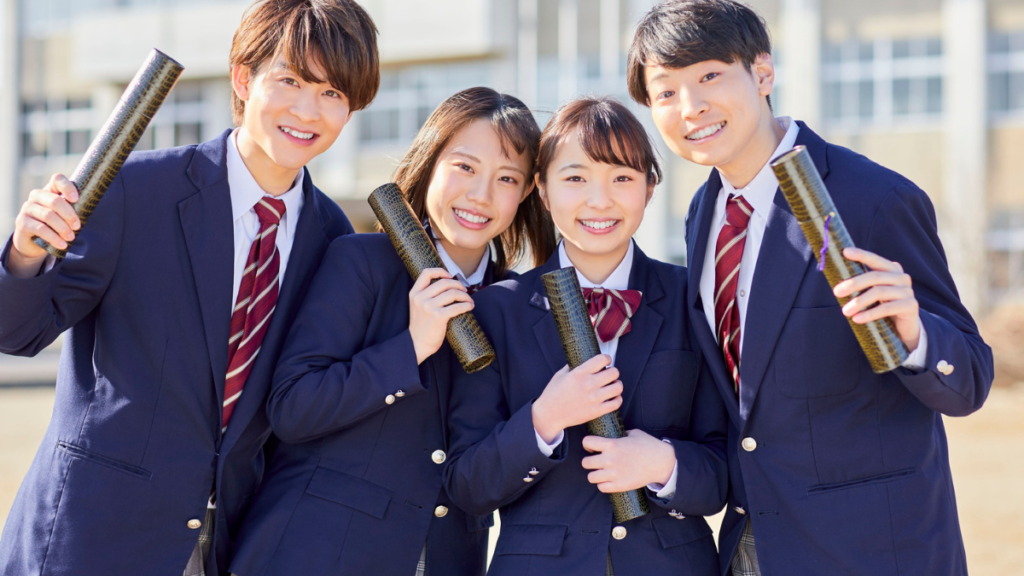
Key points:
- High schools are not compulsory
- Entrance exams are required
- Academic levels vary widely
- Tuition for public high schools is relatively low compared to private schools
- Parents are expected to participate in school events and PTA activities
3. Private and International Schools

Private and international schools offer alternatives for families seeking more flexibility, different curricula, or language support.
Private Schools
Key points:
- Private schools exist at all levels, from elementary to university
- Operated by private organizations
- Often emphasize academics, discipline, or religious values
- Entrance exams are common, even at elementary level
- Tuition and additional fees can be high
International Schools
Key points:
- International schools primarily serve multilingual and expatriate families.
- Instruction mainly in English
- High tuition fees
- Japanese language taught as a subject, not the main language
- Some schools are not officially recognized under Japanese law
4. Language Support as a Second Language
Public Schools
Most school communication, such as notices, apps, and parent-teacher meetings, is handled entirely in Japanese.
The level of language support for non-native speakers is not standardized nationwide and varies greatly by school.
Private Schools
Private schools generally expect students to have a certain level of Japanese proficiency at the time of entry, as classes are usually conducted entirely in Japanese.
Formal Japanese as a Second Language (JSL) programs are limited, and ongoing language support is often minimal.
International Schools
International schools typically provide strong support in English or bilingual education.
Many offer structured ESL (English as a Second Language) programs to support students from diverse language backgrounds.
However, because instruction is mainly conducted in English or another foreign language, children may have less exposure to academic Japanese compared to those attending Japanese public or private schools.
5. How to Choose the Right School for Your Child
There is no single “best” choice. The right school depends on your child’s needs and your family’s plans.
| Key factor | Quick guide (examples) |
|---|---|
| 1. Japanese ability |
Little/none → International school or public school with strong JSL support. Basic → Public school may work. Native-level → All options are open. |
| 2. Length of stay |
Short-term → International or flexible options. Long-term → Public or private Japanese schools. |
| 3. Educational goals |
Japanese curriculum vs international curriculum. Entrance exams vs continuous assessment. |
| 4. Budget | Consider total cost: tuition, entrance fees, transportation, uniforms, and after-school costs. |
| 5. Daily life | Communication with school, distance and schedule, and the level of parental involvement. |
6. Useful Phrases & Next Step
If you want to feel more prepared, download our full Guide from below!
Useful Links (Official & Trusted)
- Principles Guide Japan’s Educational System (Ministry of Education, Culture, Sports, Science and Technology)
- A list of schools designated as equivalent to high schools in countries other than Japan (Same as above)
- Education System and Learning Japanese-Language (Tokyo Intercultural Portal Site).