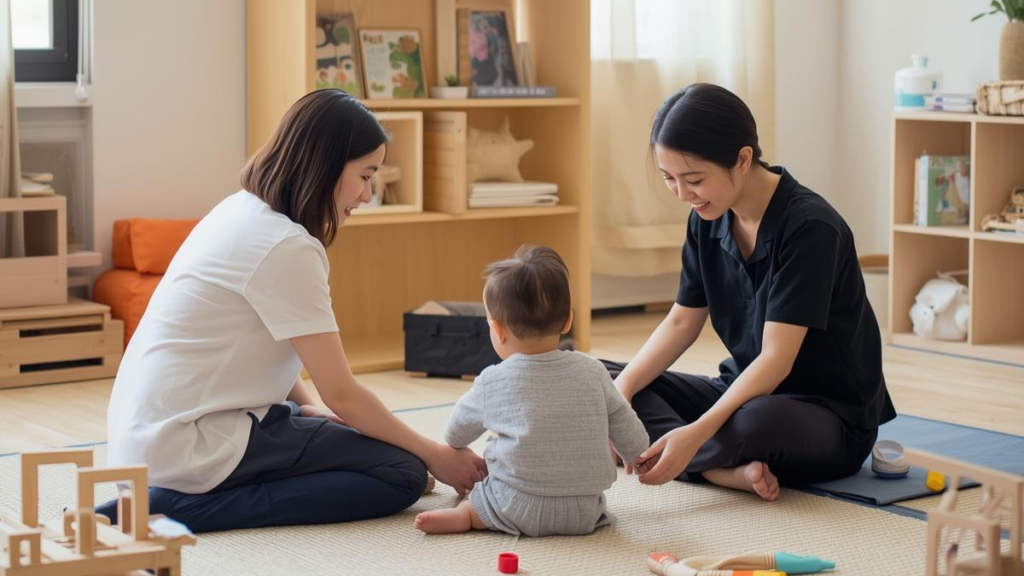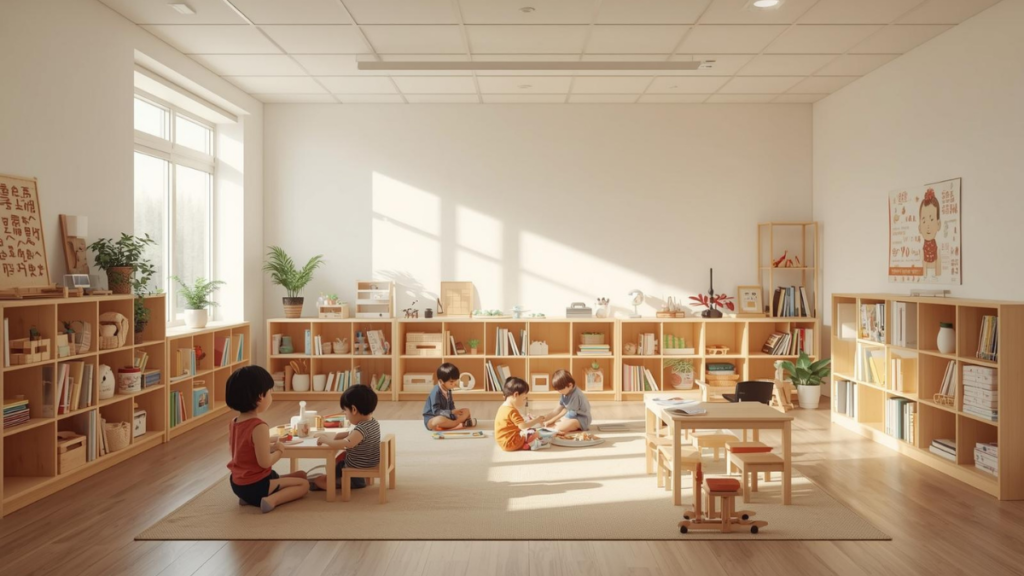
Temporary daycare in Japan (ichiji-azukari / ichiji-hoiku) is a short-term childcare service you can use when care at home becomes difficult.
If you are also considering support at home, you can explore options such as home-visit childcare and postpartum care.
👉 Read: Childcare Support Services You Can Use at Home
This article explains what temporary daycare is and how it differs from regular daycare, who can use it, and how to register.
1. What Is Temporary Daycare?
Temporary daycare is a municipal childcare service based on the Child Welfare Act.
It allows families to leave their child at a licensed childcare facility for a few hours, half a day, or a full day when temporary care is needed.
When you can use it
- childbirth or medical appointments
- parental illness
- caring for another family member
- work or job interviews
- needing a short mental break
Where it is provided
Most municipalities provide temporary daycare through:
| Type (JP / EN) | Ages | Capacity / Setting | Typical Features |
|---|---|---|---|
| Hoikuen/Daycare | 0–5 | Facility-based | Full-day childcare. Often used for municipal temporary daycare. |
| Yochien/Kindergarten | 3–5 | Facility-based | Shorter hours, more “school-style” early childhood education. Availability for temporary daycare depends on the city. |
| Kodomoen/Certified Center | 0–5 | Facility-based | Combines hoikuen + yochien functions (childcare + early education) in one system. |
| Small-scale Childcare | Usually 0–2 | 6–19 children / dedicated small facility | Very small groups and home-like environment. Children typically move to hoikuen/kodomoen at age 3. |
| Family Daycare / Hoiku Mama | Usually 0–2 | 3–5 children / home-based setting | Licensed home-based childcare with a trained caregiver. Smaller and more “home feel”; availability varies by city. |
If you are new to Japan’s childcare and education system, this overview can help you understand how these facilities fit into the bigger picture.
👉 Read: Japan’s Education System Explained
Some cities also partner with non-licensed daycare centers, Family Support Centers and childcare rooms in department stores, hospitals, or community centers.
“Ichiji-azukari” or “Ichiji-hoiku” generally refer to the same system.
2. How It Differs from Normal Daycare
Temporary daycare takes place inside the same facilities as regular daycare, but the usage pattern and schedule are different.
Similarities
- Licensed childcare staff
- Safe environment meeting national childcare standard
- Meals, snacks, naps
- Indoor/outdoor activities
Main differences
| Point | Temporary Daycare | Normal Daycare |
|---|---|---|
| Enrollment | No long-term | Annual |
| Schedule | A few hours / half-day / one-day | Full-day, fixed schedule |
| Child group | Mixed ages / daily variation | Same classmates |
| Events | Seasonal events usually not included | Included |
| Availability | Limited capacity / advance booking needed | Guaranteed care |
3. Who Can Use Temporary Daycare?
Most municipalities allow use regardless of the parent’s specific situation, as long as the family meets basic eligibility requirements. Requirements differ by city, but commonly include:
- The child is not enrolled in regular licensed daycare.
- The child meets the age requirements of the facility.
- The family resides in the municipality.
4. Costs & Hours
Costs overall range is similar across Japan.
- Licensed daycare: ¥500-600 per hour / ¥2,000-5,000 per day
- Private / unlicensed daycare: ¥1,500-3,000 per hour / ¥6,000-15,000 per day
*Additional fees may apply for a meal, snacks, and bedding rental.
Temporary daycare may be covered under Japan’s free preschool and childcare program, depending on the child’s age and household situation.
5. How to Register
Step 1: Registration & Short Interview
Before your first use, you’ll need to register at the facility. Staff may ask about allergies, medical history, personality, and etc.
You may need:
- My number card / Health insurance card
- Child medical certificate
- Maternal and Child Health Handbook
Step 2: Booking
After registration, you need to call the facility, book online or visit in person. Popular facilities may fill quickly, so early booking is recommended.
6. Useful Links & Next Step
Useful Links (Official & Trusted)
- Your City’s Temporary Daycare Page
Search: “一時預かり XX City” - Maternal & Child Health Interpreter Consultation (SHARE)
Multilingual support for communicating at clinics and hospitals. - AMDA Medical Information Center
Helps you find clinics and hospitals with foreign-language support